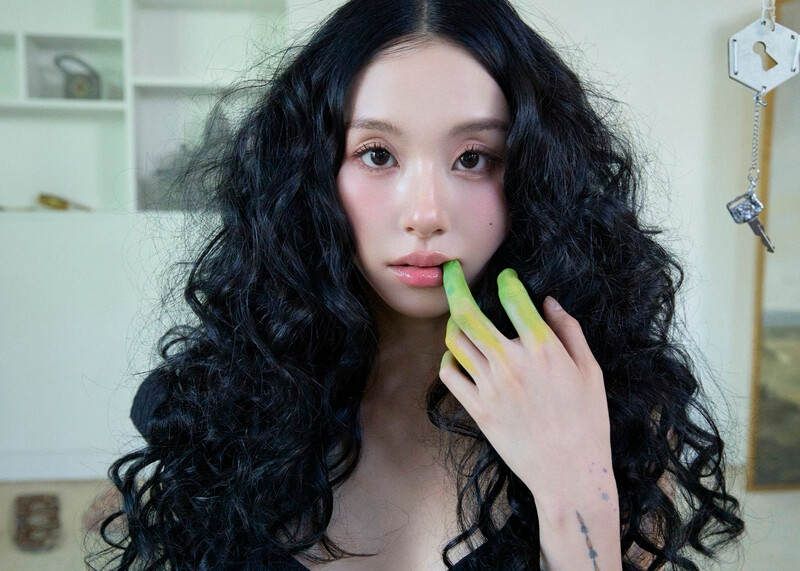

When a member of a powerhouse K-Pop group like TWICE goes solo, expectations are inevitably high. Yet CHAEYOUNG‘sdebut album, Lil Fantasy Vol. 1, doesn’t try to outshine the group or deliver a flashy reinvention. Instead, it carves out something more personal: a small, self-built world shaped by her thoughts, instincts, and contradictions. Across ten tracks (nine digital and one CD-only bonus), Chaeyoung blends playfulness with melancholy, intimacy with experimentation, offering a debut that feels less like a fantasy escape and more like a self-portrait in motion.
1. Avocado (feat. Gliiico)
The first collaboration with Gliiico, Avocado is both surreal and symbolic. Dreamy textures set a whimsical stage, while fruit metaphors twist into themes of temptation and curiosity. Chaeyoung chose avocado as her “forbidden fruit,” not for meaning but for sound and intrigue. As the opening track, it establishes the playful yet layered tone of the album.
Music Analysis
The track built around a minimal yet hypnotic beat. The production leans toward dreamy alt-pop with subtle electronic textures. The rhythm feels steady but slightly off-kilter, matching the surreal and playful tone. Vocals are soft, layered with a light haze, contributing to an ethereal soundscape. The repetition in the outro reinforces the hypnotic, dreamlike quality.
Lyrics Analysis
The lyrics use playful fruit metaphors (strawberry, blueberry, avocado) but twist them with darker undertones, an avocado becomes a “bad one” that must be hidden underground. This duality (innocence vs. danger, sweetness vs. secrecy) mirrors the biblical “forbidden fruit” imagery. The chorus’ lines, “Believe me / Deceive me / See me as yours / Try me / Bite me”, oscillate between desire and vulnerability, suggesting themes of temptation and self-exposure.
Harmony
The dreamy, slightly warped sonic texture enhances the surreal storytelling of falling into a Wonderland-like world. The production’s hypnotic nature mirrors the looping curiosity and temptation conveyed in the lyrics. The song effectively sets the album’s thematic stage: fantasy, self-exploration, and hidden meanings.
Judging Scale: 4.5 / 5
A strong opener: it’s conceptually playful yet symbolically layered, musically engaging, and thematically aligned with the idea of fantasy.
2. Band-Aid
Built from a Gliiico instrumental and reshaped into an R&B groove, Band-Aid balances sweetness with melancholy. The metaphor captures the contradiction of someone who heals while also hurting. Chaeyoung’s favorite lyric, “Can you be my band-aid?”, embodies that duality. Smooth production reinforces the intimacy, making this track quietly resonant.
Music Analysis
The track has a brighter pop sheen compared to “Avocado”. The instrumentation blends light R&B grooves with smooth electronic beats, creating a gentle, catchy pulse. The vocal lines are layered with echo and reverb, lending an intimate yet polished atmosphere. The production feels restrained, avoiding heavy drops, instead relying on groove and vocal repetition for memorability.
Lyrics Analysis
The lyrics center on the metaphor of a Band-Aid: someone who heals but also remains through pain. The duality is striking, the “Band-Aid” comforts and sticks close but also implies being there even when hurt. Lines like “Dialing one-one-nine, baby / You just bumped my mind” playfully mix emergency imagery with emotional vulnerability.
Harmony
The smooth, soothing production complements the lyrical theme of seeking comfort in attachment, even if it’s imperfect. The repeated chorus mirrors the persistence of sticking together, much like a Band-Aid clings to skin. However, the sweetness of the sound contrasts with the undercurrent of pain, highlighting the tension between comfort and hurt.
Judging Scale: 4.0 / 5
A solid, accessible track. It’s catchy and lyrically clever, though less experimental than “Avocado.” Its strength lies in balancing intimacy with mainstream appeal.
3. Shoot (Firecracker)
The title track is both anthem and ordeal. Behind its explosive beats and chant-like hooks lies a grueling 12-hour recording session that left Chaeyoung frustrated as she chased the right vocal tone. That raw struggle bleeds into the performance, adding urgency to its brightness.
The music video elevates the song with dreamlike visuals, firecracker motifs, and choreography that mirrors release and defiance. Together, they transform the track into the album’s boldest declaration: emotions shot straight from the heart.
Music Analysis
The track is vibrant and bold. It opens with atmospheric synth layers, then bursts into a rhythmic drive with percussive beats and soaring synth chords. Vocals are delivered with urgency, alternating between light melodic runs and chant-like hooks in the chorus (“Shoot from my heart, salute from the heart”). The repetition amplifies its anthem-like quality, designed to be instantly memorable.
The layering is heavier here than the first two tracks, signaling its role as the album’s centerpiece. The production blends K-pop gloss with indie-electronic touches, balancing commercial appeal and Chaeyoung’s distinct artistry.
Lyrics Analysis
Lyrically, “Shoot (Firecracker)” is about unleashing emotions honestly and fearlessly. The firecracker metaphor captures both vulnerability and explosive passion. The verses show self-reflection and resilience (“I’ve been hurt before, I know how to hold on”), while the chorus embodies pure release. The booming production mirrors these ideas perfectly, pulsing beats as ignition, bright synths echoing fireflies, and layered vocals like bursts of light. It’s an emotional and sonic detonation, all aligned to Chaeyoung’s theme of authenticity.
Visual & Performance Layer (Music Video)
The accompanying music video deepens this message. Dreamlike imagery, glowing fireflies, surreal landscapes, and kaleidoscopic bursts, amplifies the fantasy element that runs throughout the album. Chaeyoung is styled between playful and bold looks, embodying both fragility and strength. Choreography highlights gestures of release and shooting, directly visualizing the chorus hook. The warm color palette and firework motifs match the song’s sonic brightness, while reflective shots of Chaeyoung hint at self-confrontation. Together, the sound and visuals merge into a unified statement: vulnerability transformed into unapologetic self-expression.
Judging Scale: 5 / 5
A defining moment of the album. The track’s sonic punch, lyrical clarity, and music video’s artistry converge seamlessly, making it the most complete expression of Chaeyoung’s vision so far.
4. Girl
Calm and guitar-driven, Girl feels like a song of kinship. Chaeyoung describes it as written for girls who share her taste and style. Its softness, paired with lyrics about secrets and quiet hope, makes it soothing yet reflective, a natural extension of her voice.
Music Analysis
“Girl” is built on a dreamy, minimalist framework. The instrumental is light, leaning toward indie pop with electronic undertones. The arrangement is fluid rather than forceful, synth washes, airy beats, and reverb-heavy vocals dominate, creating a sense of floating. The pacing is steady, but not driving; instead, it gives the song an intimate, almost whispered presence.
Lyrics Analysis
The lyrics alternate between English and Korean, reinforcing duality: vulnerability and reassurance. The chorus repeats the question “Who’s the one?”, capturing the uncertainty of love and identity. The Korean verses add a layer of reflection, with lines like “더 가까이 와도 좋아 / 작은 소녀야 / 왜 돌고 돌다 부딪히고 살아” (It’s okay if you come closer, little girl, why live colliding as you keep circling around?). The outro acknowledges weariness but still seeks lightheartedness and freedom (“Then I can find my cutie wings”).
Harmony
The music’s soft textures underscore the lyrics’ fragility. There’s a constant tension between uncertainty and the desire for connection, reflected in the way the production never fully erupts but rather hovers in a dream state. This mirrors the theme of secrets, fears, and hope, a quiet emotional tug-of-war.
Judging Scale: 4.2 / 5
An understated track with emotional weight. It may lack the punch of “Shoot (Firecracker)”, but its strength lies in atmosphere and lyrical subtlety, adding depth to the album’s narrative arc.
5. Ribbons (feat. Sumin & Jibin)
A rare all-female collaboration, Ribbons brings together three artists from different corners of the Korean music scene. Each wrote lyrics separately, and all surprisingly focused on overcoming hardship. The result is aggressive, quirky, and empowering.
With glitchy textures, sudden shifts, and surreal humor (“Swallow my pride with chicken fries”), the track thrives in contradiction. The soaring bridge (“wave your ribbons, dance like reborn”) pushes it toward catharsis. Chaeyoung calls it the album’s most aggressive song and it shows.
Music Analysis
“Ribbons” is one of the most experimental tracks so far. The instrumental leans on playful, almost glitchy electronic textures with a bounce that feels quirky yet sharp. Vocals are shared dynamically: Chaeyoung’s rhythmic delivery contrasts with SUMIN’s smooth tonal lines, while Jibin adds an alternative edge. The song avoids traditional pop structure, instead layering shifting beats, syncopation, and abrupt pauses to create unpredictability.
Lyrics Analysis
The lyrics weave between fragmented thoughts and vivid metaphors. Everyday imagery (“chicken fries”) sits alongside cosmic and emotional symbols (“wave your ribbons, dance like reborn / 밤하늘 위로 빛나는 my logo”). This juxtaposition of the ordinary and surreal embodies a push-pull between vulnerability and self-assertion. The refrain “Swallow my pride with chicken fries” could be interpreted as masking pain with trivial comforts, dramatizing the collision of humor and struggle.
Harmony
Musically, the unpredictable production matches the lyrical playfulness and contradictions. Where the lyrics turn surreal or absurd, the instrumental mirrors with sudden shifts, almost as if the track is bending to the weight of Chaeyoung and her collaborators’ imagination. The “ribbons” in the bridge act as a unifying image, a symbol of rebirth and brightness, and the production lifts here with soaring synth layers, aligning perfectly with the metaphor of shining in the night sky.
Judging Scale: 4.6 / 5
A bold standout. The song’s unconventional structure and mix of collaborators make it one of the freshest entries on the album, striking a balance between quirky fun and meaningful reinvention.
6. Downpour (feat. Gliiico)
Written during a rainy season in Japan, Downpour captures its inspiration directly: a looped, repetitive instrumental that feels like relentless rainfall. Chaeyoung has said she listened to it repeatedly while making the album, drawn to its hypnotic simplicity.
The lyrics explore the end of a love, “A love you never needed, I love you, now I’m leaving”, delivered with muted resignation. Cold and detached, it’s an interlude of heartbreak amid brighter tracks.
Music Analysis
“Downpour” is one of the the album’s shortest tracks, but one of the heaviest in mood. Built on lo-fi electronic beats and a slow, atmospheric tempo, the production leans toward melancholic R&B. The mix is stripped down: muted drums, deep basslines, and echoes that mimic rainfall. Vocals are delivered with restraint, almost drained, enhancing the sense of loss and emotional numbness.
Lyrics Analysis
The lyrics capture a relationship breakdown, love that was unwanted (“A love you never needed / I love you, now I’m leaving”) and the lingering pain of absence (“Now the rain ain’t the same without you”). The Korean verses add subtle imagery of umbrellas and concealment, tying the metaphor directly to rain as both shelter and isolation. It feels intimate and confessional, like a private letter rather than a polished pop anthem.
Harmony
The sparse instrumental mirrors the lyrical emptiness. Where earlier tracks (like “Band-Aid”) still carried warmth even in pain, “Downpour” is cold and detached, reflecting resignation. The rain motif is not only present in the lyrics but sonically recreated through washed-out production, making this one of the most cohesive sound-and-theme pairings on the album.
Judging Scale: 4.4 / 5
Brief but impactful. Its conciseness works to its advantage, leaving a lingering impression despite its short runtime. A somber emotional interlude that deepens the album’s tonal range.
7. BF
Lo-fi and bare, BF is Chaeyoung at her most autobiographical. A self-professed homebody, she reflects on dolls piling up at home while friendships fade. The chorus captures closeness and distance in equal measure: “I don’t wanna see your face, I can feel it through your text.”
At just over a minute, it feels like a voice memo rather than a studio song, but that rawness is its strength.
Music Analysis
Musically, it’s sparse and lo-fi, leaning into bedroom-pop territory. The instrumental is stripped to the bones: muted beats, soft synth pads, and a casual, almost diary-like vocal delivery. The track feels intentionally underproduced, as if Chaeyoung wanted it to sound like a late-night voice memo or demo rather than a polished studio track.
Lyrics Analysis
The lyrics are minimal yet emotionally sharp. They describe loneliness and lethargy, staying in bed all day, losing track of time, lacking appetite, contrasted with a bittersweet dedication to a “best friend.” The chorus (“I don’t wanna see your face / I can feel it through your text”) is paradoxical, implying both closeness and distance, a connection maintained through absence rather than presence.
Harmony
The lo-fi, unfinished quality of the sound pairs perfectly with the raw honesty of the lyrics. This track functions as an interlude more than a fully fleshed-out song, but its honesty and brevity make it resonate. The casual tone amplifies the intimacy, like overhearing Chaeyoung’s private thoughts rather than a staged performance.
Judging Scale: 4.0 / 5
Not the strongest musically, but artistically important. It adds rawness to the album’s flow, showing Chaeyoung’s willingness to present unpolished fragments of her world.
8. 그림자놀이 (Shadow Puppets)
Conceived with Peejay, this track explores Chaeyoung’s life as a public figure who must often conceal herself, feeling like a shadow. The haunting intro alone convinced her they had something powerful.
Childlike “la-la-la” refrains add innocence, while lyrics about hiding and self-image bring depth. Chaeyoung has admitted this is one of the songs she’s most attached to, even tearing up while recording it. Vulnerable and intimate, it’s a standout.
Music Analysis
At about 2 minutes 27 seconds, this track blends melancholy with childlike simplicity. The instrumental is minimalist yet haunting: soft piano chords and airy synths float above subtle percussive taps. Vocals are restrained, almost whisper-like, giving the impression of someone hiding in plain sight. The repeating “la-la-la” motif in the intro and outro adds both innocence and eeriness, as if returning to a childhood memory that has dark undertones.
Lyrics Analysis
The lyrics revolve around concealment and longing. Phrases like “Hoodie on, they don’t see us” and “둘이서 저기 숨어” (the two of us hide together) suggest secrecy, while the verse reflects on self-image, hiding one’s “dry and pretty face.” The metaphor of “shadow play” evokes both childlike games and the masks we wear to navigate adulthood. The hopeful yet uncertain line “Will the days return when I can run around like a child?” hints at nostalgia mixed with sorrow.
Harmony
Musically, the quiet, dimly lit soundscape perfectly matches the theme of shadows and concealment. The repetitive la-la motif reinforces the childish aspect of shadow play, while the subdued tone emphasizes Chaeyoung’s introspection. This is one of the most emotionally transparent tracks on the album, a vulnerable reflection of identity, image, and hidden desires.
Judging Scale: 4.8 / 5
A standout for its emotional rawness and symbolic depth. It captures Chaeyoung’s fragility more directly than any other track so far, aligning perfectly with the album’s narrative of fantasy, vulnerability, and identity.
9. 내 기타 (My Guitar)
Originally intended as a CD-only track, My Guitar was rearranged acoustically and elevated into a poignant finale. First performed during TWICE’s Ready to Be Tour, it represents the beginning of Chaeyoung’s solo path.
Stripped to voice and guitar, it’s imperfect, clumsy, and tender, exactly what makes it moving. Addressing her guitar as both object and metaphor, she reflects on artistry, guilt, and love. The honesty makes it a perfect closing chapter.
Music Analysis
This track closes the album on a stripped-down, intimate note. Acoustic guitar is the foundation, warm and slightly raw, paired with gentle vocals that feel unguarded. The production resists layering keeping the focus on the simplicity of voice and strings. The result feels like a home recording, contrasting the polish of earlier tracks, giving the album an authentic, personal closure.
Lyrics Analysis
The lyrics directly address Chaeyoung’s guitar as both an object and metaphor. Buying it for its beauty, enduring its flaws, and apologizing for neglect reflect Chaeyoung’s own relationship with her artistry, imperfect, sometimes painful, but deeply personal. Lines like “My aching finger, so much dust piled up, I’m sorry” convey guilt and tenderness. The chorus (“My guitar, clumsy as I am, what do you even like about me?”) is vulnerable, self-doubting, yet affectionate.
Harmony
The bare-bones acoustic arrangement mirrors the lyrical theme of imperfection and intimacy. The song feels less like a performance and more like a confession whispered directly to the listener. Ending the album with this track ties back to Chaeyoung’s desire to present her “most natural self”, the fantasy dissolves, leaving behind the core of her identity.
Judging Scale: 4.9 / 5
A near-perfect closer. It encapsulates Chaeyoung’s sincerity and artistry, rounding out the album with vulnerability and raw honesty.
10. Lonely Doll Waltz (CD-only bonus)
An instrumental sketch made on Ableton, Lonely Doll Waltz is awkward, cute, and strange, a miniature gift for physical album buyers. It’s not essential, but it adds a charming, experimental footnote to Chaeyoung’s world-building.
Judging Scale: 3.8 / 5
Final Words
Lil Fantasy Vol. 1 doesn’t aim to deliver the glossy, predictable perfection often expected in K-pop. Instead, it thrives on contradictions, intimacy, and honesty. It’s less about fantasy as escapism and more about the little world Chaeyoung carries inside her: fragile, playful, sometimes heavy, sometimes whimsical.
And that’s precisely what makes it special. It is so Chaeyoung. These songs feel true, pulled straight from her heart. Lil Fantasy Vol. 1 it’s a portrait of an artist daring to show herself, unpolished and unapologetic.
Final Judging Scale: 4.6 / 5
A debut that thrives in its honesty, imperfect, fragile, and imaginative, just like the artist herself.